From Output to Outcome
Bridging Systems Architecture and
Narrative Media
I don't just design screens; I architect the ecosystems that build them. My work shifts teams from reactive UI production to building predictive, story-driven systems that drive measurable business value.
01. The Evolution of Design Maturity
From Ticket-Takers to Strategic Partners
In complex environments, design isn't just about the artifact—it's about the architecture of decision-making. I lead teams by shifting the focus from "Launch to Solve" to "Launch to Learn." Every feature is a hypothesis, and our job is to reduce the time it takes to validate it.
REACTIVE
"Here is a requirement: make it pretty."
PREDICTIVE
"Here is a user problem; let’s define the solution."
PROACTIVE
"Here is a market opportunity; let’s innovate."
02. High Craft as a System
From Art to Engineering
I believe that a Design System is not just a library of components; it is the physics engine of a digital product. My approach shifts the discipline from subjective "pixel painting" to objective engineering, ensuring that every design decision—from color ramps to component architecture—is scalable, accessible, and themeable by default.
Core Principles:
1. Logic Over Legacy: I don't just organize chaos; I re-architect it. I move teams away from hard-coded values to Semantic Token Strategies that decouple design intent ("Action") from visual execution ("Blue"). This allows for instant theming (Dark Mode) and future-proofing without refactoring.
2. Accessibility as Physics: Compliance isn't a checkbox at the end; it's baked into the math. My systems utilize Luminosity Curves and "Safety Lines" (e.g., the Base-60 Rule) to guarantee WCAG AA contrast ratios automatically, removing the guesswork for product designers.
3. The "One Ramp" Strategy: I reject the inefficiency of maintaining separate libraries for Light and Dark modes. Instead, I build Unified Ramps with inversion logic—where the system mathematically predicts the correct tone for the context, reducing maintenance overhead by 50%.
4. Governance by Design: A system only works if it’s easy to use. I structure libraries with strict Code Parity Foundations → Components → Templates → Patterns use Luminosity Curves and "Safety Lines" (e.g., the Base-60 Rule) to automatically guarantee WCAG AA contrast ratios use Luminosity Curves and "Safety Lines" (e.g., the Base-60 Rule) to automatically guarantee WCAG AA contrast ratios → Patterns to mirror the engineering environment, ensuring that what we design is exactly what we ship.

I lead by bridging the gap between Design and Engineering. I don't just hand off assets; I define the API of the design, speaking the language of tokens, variables, and dependencies to build systems that engineers love to implement and designers feel empowered to use.
03. Operationalizing Creativity
The "Control Center" Strategy
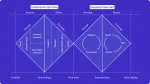
Creativity needs a runway. Chaos is the enemy of velocity. I build "Design Ops" ecosystems, standardized playbooks, robust file governance, and clear scoping frameworks that eliminate friction. By automating the mundane, I free my team to focus on the magic. To bridge the gap between high-level strategy and ground-level execution, we need a standardized framework that aligns Design, Product, and Engineering on the fidelity of effort required.
1. Learn (Discovery): Deep research, problem definition, and hypothesis generation.
2. Build (Definition): Iterative prototyping, system design, and "Pre-Refinement" with engineering to eliminate downstream churn.
3. Measure (Impact): Post-launch analysis using Pendo and UX Scorecards to quantify success.
The Infrastructure of Execution
However, a rigorous process cannot survive in a chaotic environment. To ensure the Playbook is actionable, I had to rebuild our underlying tooling infrastructure.
The "Project Binder" Ecosystem To stop the "where is the latest file?" chaos, I re-architected our Figma environment into a standardized ecosystem. Every file is a "Project Binder" containing the Design Brief, Change Log, Jobs-to-be-Done (JTBD), and Engineering Handoffs. This ensures that any engineer or stakeholder can jump into a file and immediately understand the context, not just the content.
04. Evidence-Based Design
Moving from Opinions to Evidence
Subjective debates about UI (e.g., "Should this status chip be red or grey?") erode team velocity and camaraderie. I champion Evidence-Based Design—using rapid research and AI-driven synthesis to settle decisions objectively.
By leveraging tools like Gemini for "Deep Research" analysis and Pendo for behavioral data, we move the conversation from "I think" to "The data suggests." This empowers the team to make decisions with confidence and reduces the "approval churn" that plagues large organizations.

Empathy is Data with a Soul
In data-heavy industries, it is easy to lose the human in the numbers. I use empathy not just as a buzzword, but as a research tool. By synthesizing quantitative data with qualitative narrative (Empathy Maps, Personas), we transform cold statistics into compelling user stories.
The Approach: Continuous user testing, narrative storytelling, and cross-functional empathy workshops.
The Result: Data-driven decisions that feel intuitively human.
05. The "Incubator" Model
Scaling Innovation
Innovation is hard to do on a massive scale. My strategy is to treat specific product pods as "Innovation Incubators."
We pilot new processes—like AI-driven research workflows, Design Debt paydown models (10% allocation), or Dev Mode handoffs—locally within the incubator. Once proven, we package these "wins" and scale them across the broader organization.
This allows us to move fast like a startup while influencing the standards of a global enterprise.

Design isn't just about what we build;
It's about how we build it. By combining operational rigor with evidence-based strategy, we don't just ship software—
We ship certainty.